
Bokashi FAQ
🗑️ Using the Bokashi Bin
 |
 |
 |
What is Bokashi composting? |
What is Bokashi bran made of? | How do I use a Bokashi bin? |
| Bokashi composting uses a mix of beneficial microbes (Effective Microorganisms or EM-1) to ferment food waste in an airtight container. It’s a fast, low-odour method that prepares food scraps for full breakdown in soil or compost. Bokashi is an anaerobic process so removing as much air as possible and ensuring your using an airtight container is critical to the process. |
Bokashi bran is made from wheat or rice bran infused with EM microbes, molasses, and water, then dried and stored. It’s the “fuel” that drives the fermentation process. Our organic Bokashi bran is made from
|
Follow the steps below for composting the Bokashi way:
|
🗑️ Using the Bokashi Bin
-
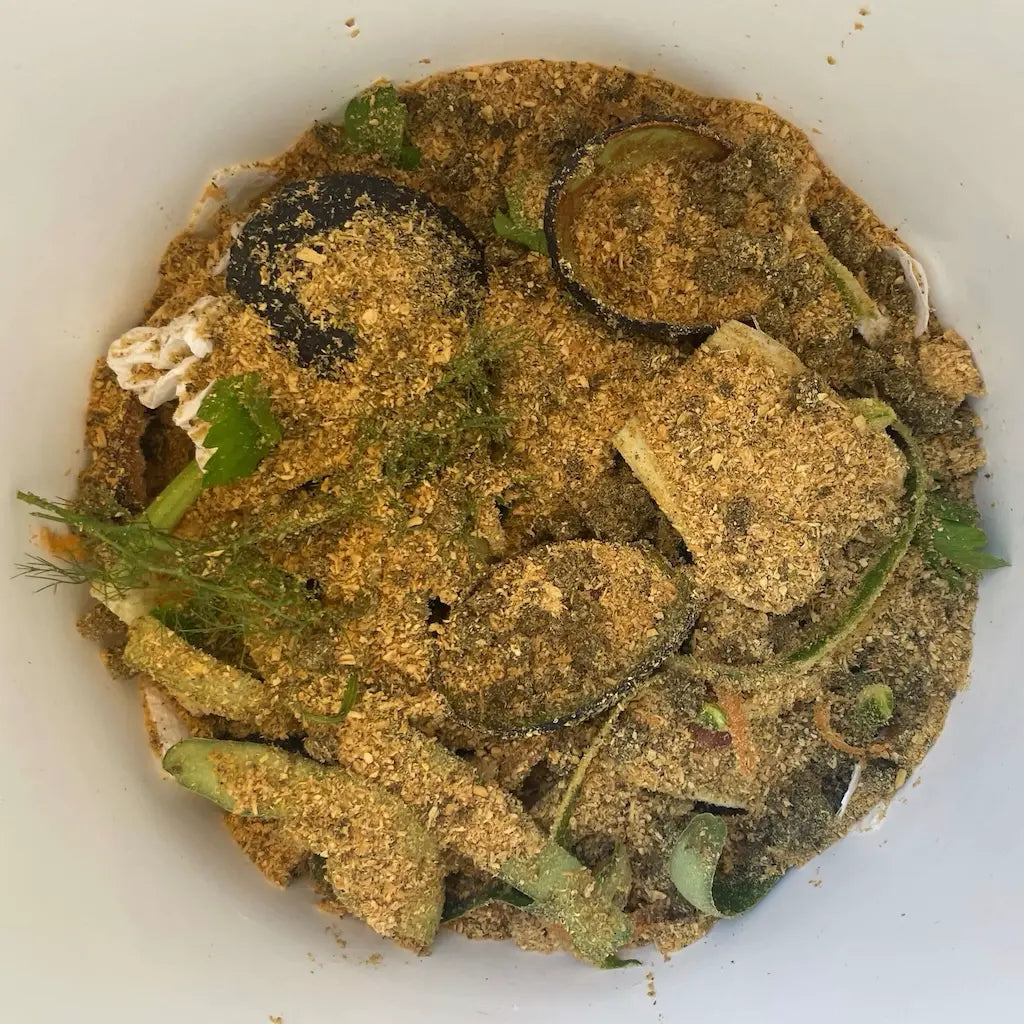
What is Bokashi composting?
Bokashi composting uses a mix of beneficial microbes (Effective Microorganisms or EM-1) to ferment food waste in an airtight container. It’s a fast, low-odour method that prepares food scraps for full breakdown in soil or compost. Bokashi is an anaerobic process so removing as much air as possible and ensuring your using an airtight container is critical to the process.
-
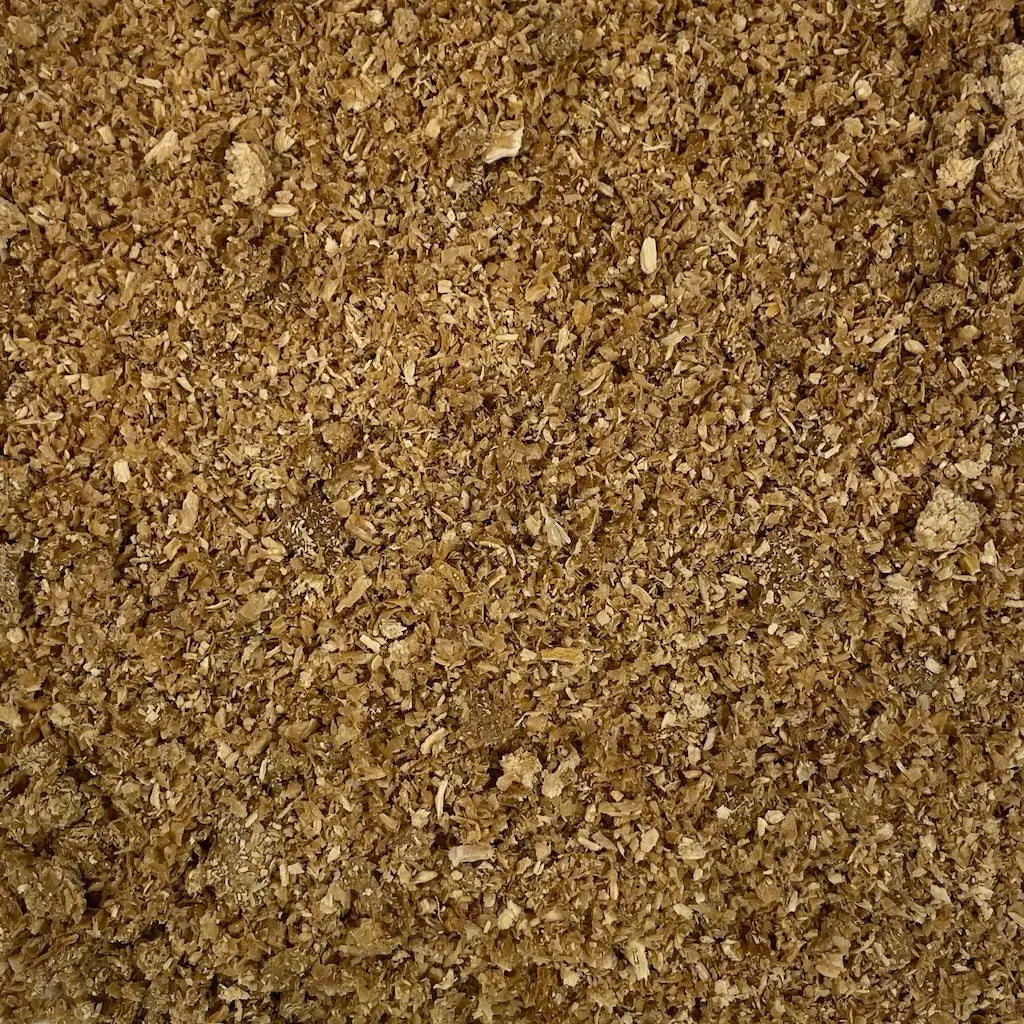
What is Bokashi bran made of?
Bokashi bran is made from wheat or rice bran infused with EM microbes, molasses, and water, then dried and stored. It’s the “fuel” that drives the fermentation process.
Our organic Bokashi bran is made from
- organic wheat bran
- plantation grown pine
- organic molasses
- EM-1
- rain water
-
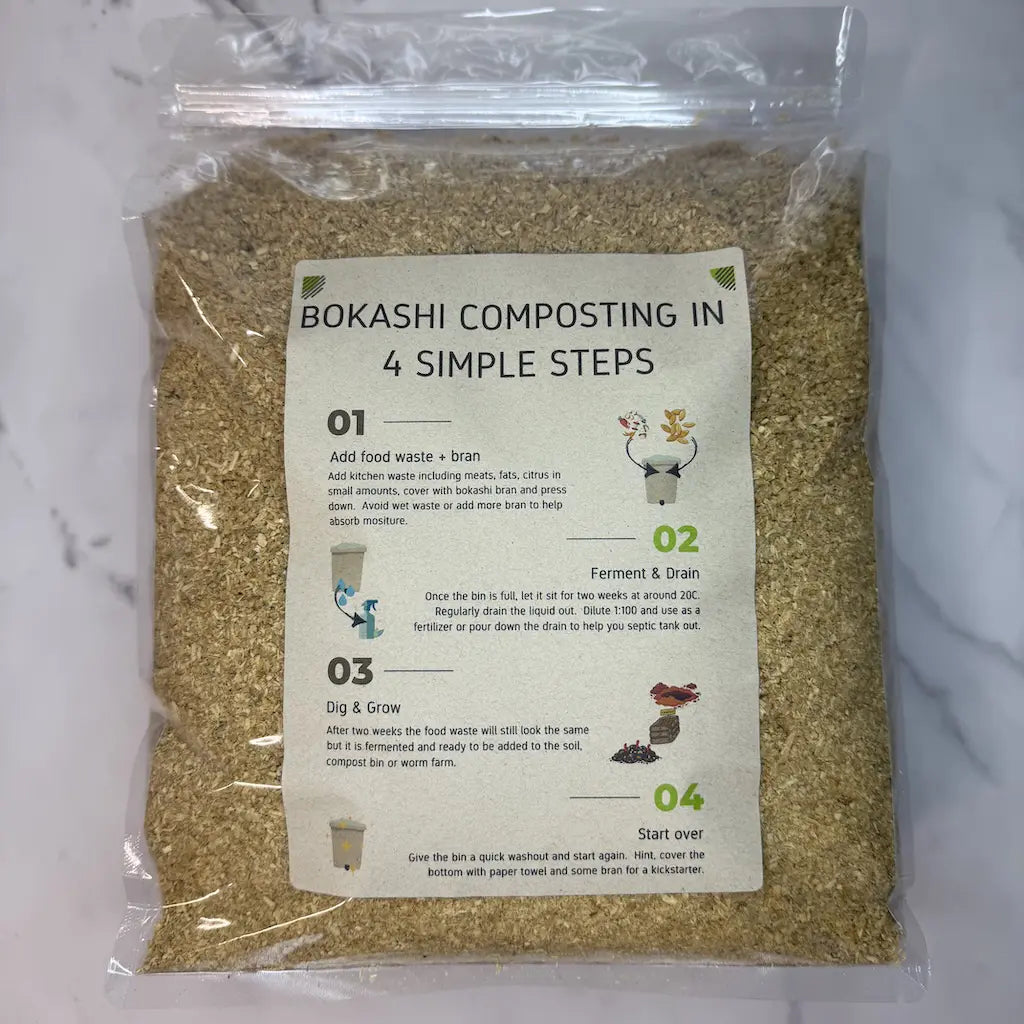
How do I use a Bokashi bin?
Download Our Bokashi In 4 Simple Steps GuideFollow the steps below for composting the Bokashi way:
- Add food scraps to the bin
- Sprinkle a handful of bokashi bran over the top, lightly covering the food scraps.
- Press down to compress and remove air
- Close the lid tightly after every use
- Drain off the liquid every few days, this depends on how moist or dry your food scraps are
- Once bin is full, let it ferment for two weeks (longer in winter)
- Bury the fermented leftovers in soil, add to the compost bin or worm farm
-
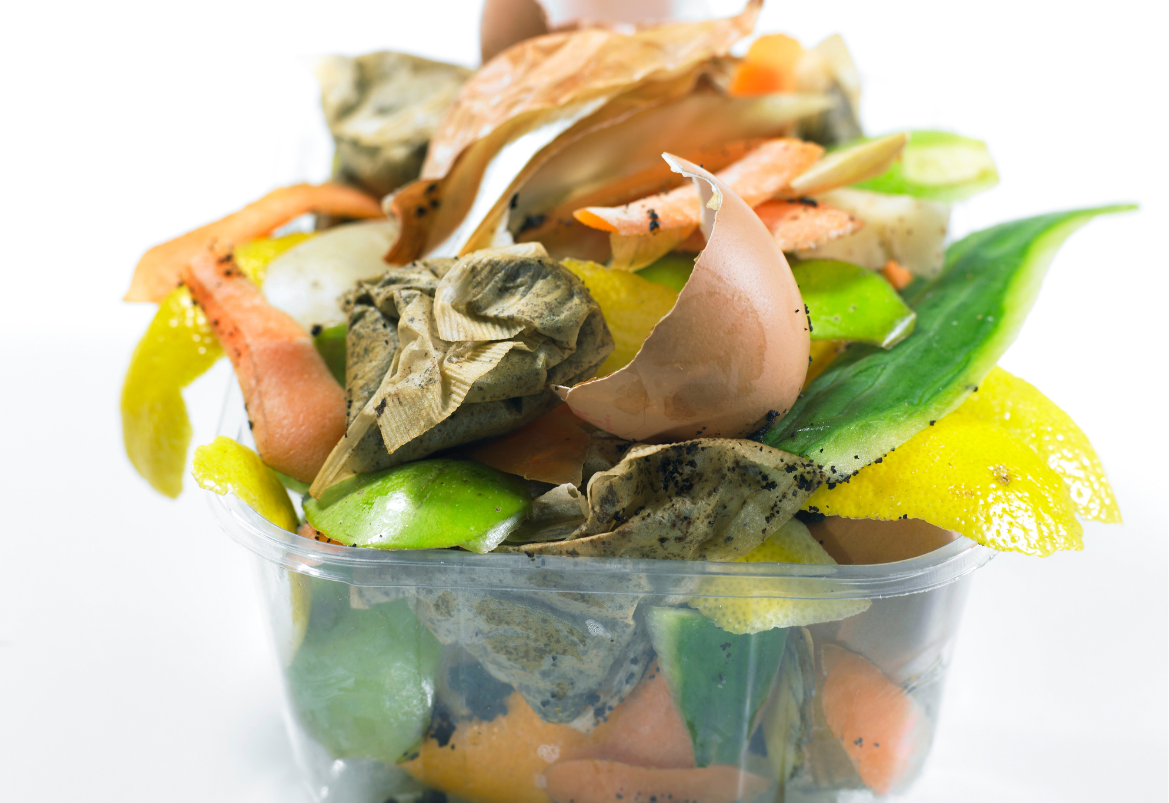
What can I put in a Bokashi bin?
Accepted:
- Fruit and vegetables
- Cooked leftovers
- Meat, fish, small bones
- Dairy products
- Bread & grains
- Coffee grounds, tea bags
Avoid:
- Rotten or mouldy food
- Excess liquid
- Large bones
- Non organic materials
-
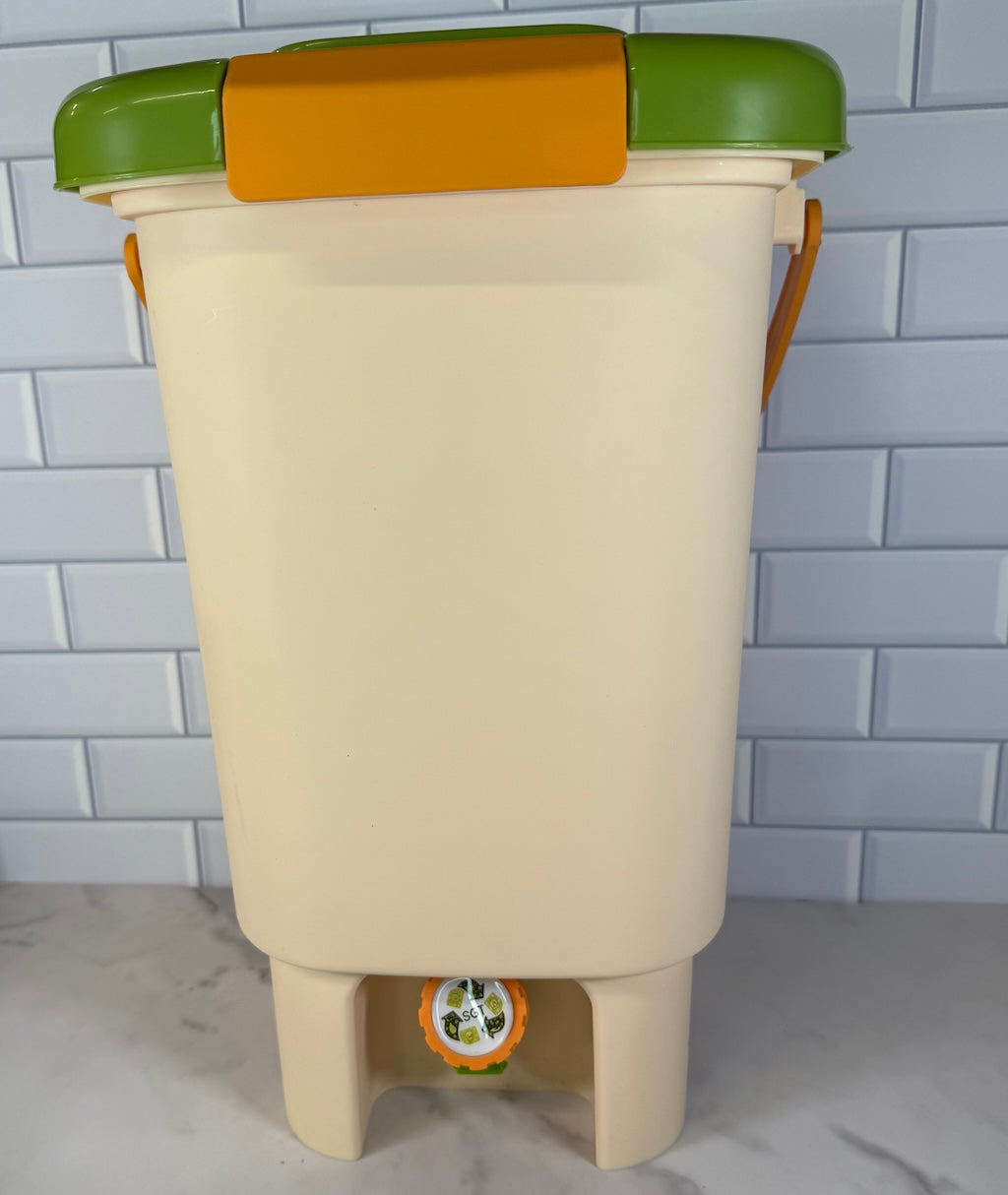
One Or Two Bins?
You can do Bokashi composting with just one bin however once the bin is full it has to sit and ferment for two weeks meaning your throwing away compost gold during that time.
This is why most people will have two bins and then cycle between the bins so that compost gold is always available and no food waste is going to the regular bin service.