



Probiotic Soil Tonic Concentrate
Probiotic Soil Tonic Concentrate
Couldn't load pickup availability


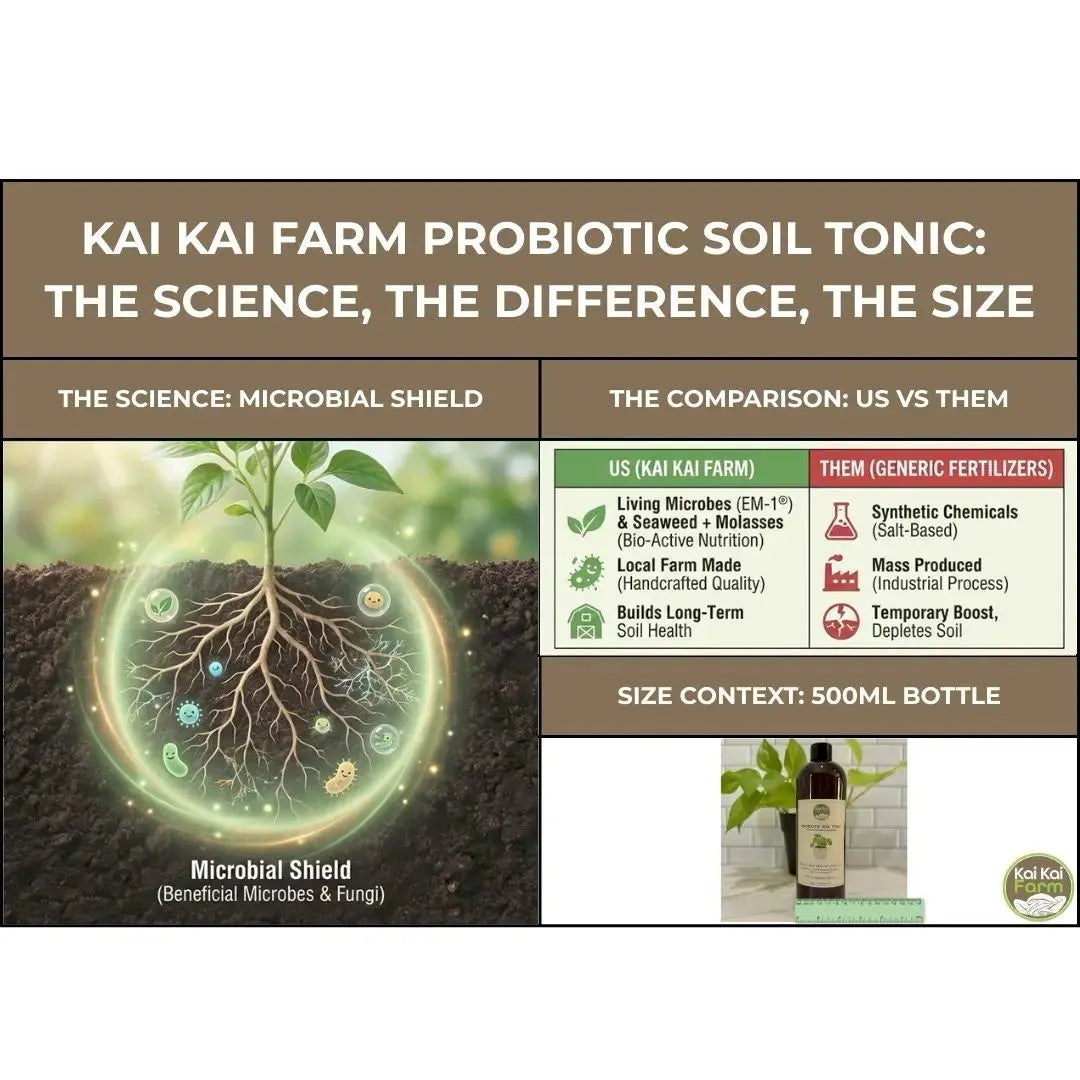
Your gut microbiome has billions of bacteria working to keep you healthy. Your soil has the same system. Most gardens are slowly starving it.
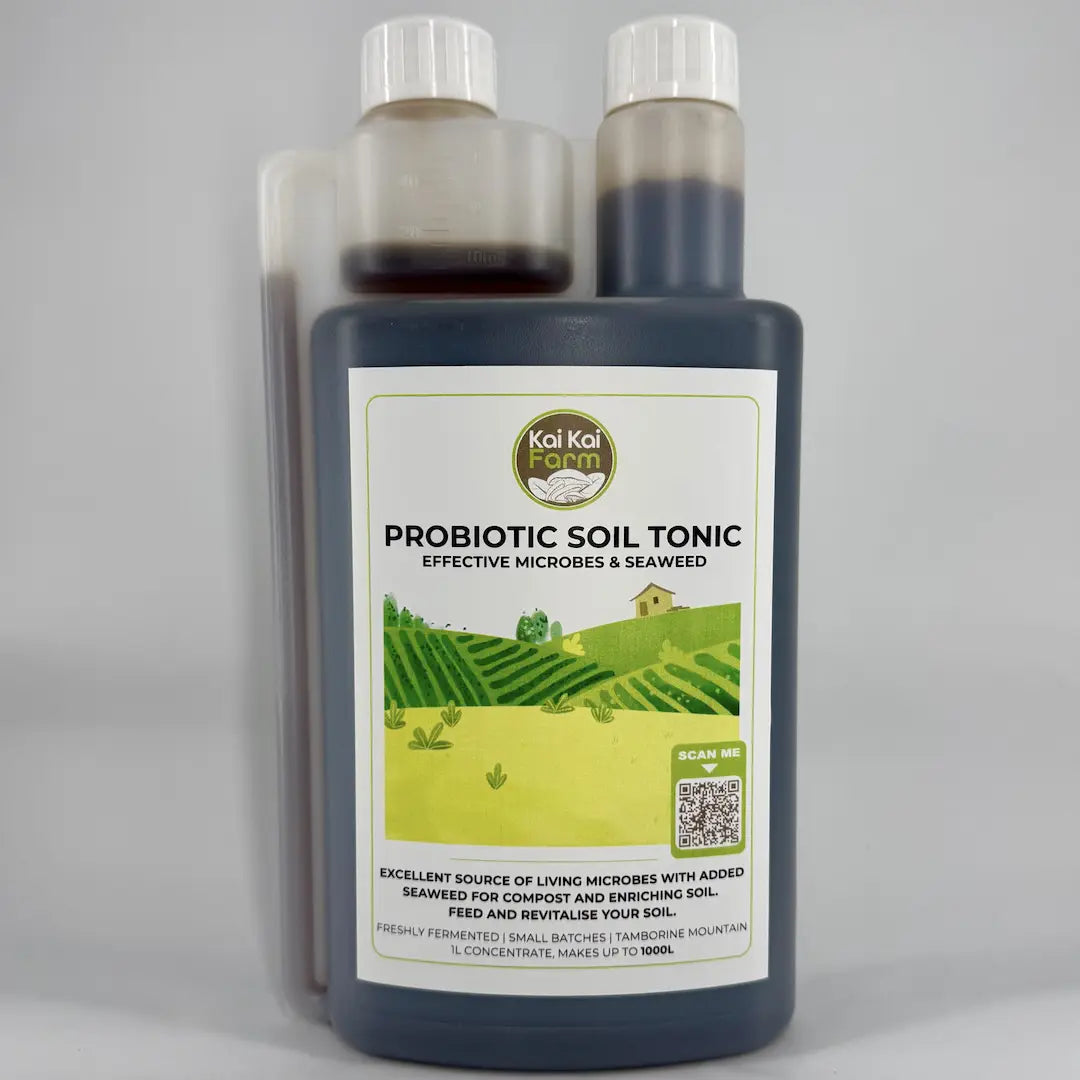
Our Probiotic Soil Tonic is a high-potency liquid concentrate, fermented on our Tamborine Mountain farm using authentic EMRO EM-1 as the microbial base, then combined with seaweed extract and organic molasses. The result is a living tonic packed with lactic acid bacteria, yeasts and phototrophic bacteria that get to work the moment they hit your soil — breaking down organic matter, unlocking bound nutrients and feeding the root zones that feed your plants.
A highly concentrated formula: a little goes a long way. Dilute, apply, and let the biology do what biology does best.
What’s inside — and why it matters
Farm-activated EMRO EM-1®
The microbial engineWe use authentic EMRO EM-1 as the foundation, then activate and expand it on our farm through a secondary fermentation process. This produces a far more biologically dense product than bottled EM-1 straight from the shelf — more organisms, more diversity, fresher cultures. The consortium of lactic acid bacteria, yeasts and phototrophic bacteria work together to regenerate soil biology from the ground up.
Seaweed extract
The growth catalystSeaweed is one of the most mineral-dense inputs available to a gardener — over 60 trace elements alongside natural cytokinins and auxins, the plant hormones that drive cell division, root development and stress resistance. These compounds are most effective in liquid form where they can be rapidly taken up through roots and foliage. The seaweed complements the EM organisms: one feeds the soil biology, the other speaks directly to the plant.
Organic molasses
The microbial food sourceMolasses is a carbon-rich food source that sustains the EM-1 organisms through fermentation and keeps them active in the bottle. When applied to soil, it also acts as a quick energy source for the broader soil microbiome — triggering a cascade of microbial activity that goes well beyond the organisms in the bottle itself.
Rainwater base
The clean carrierWe use rainwater collected on our farm as the base for fermentation — chlorine-free, soft and naturally slightly acidic, which is exactly what EM cultures need to thrive. Chlorinated tap water actively damages beneficial microbes. Using rainwater means the organisms arrive at your garden in their best possible condition. See application tips for how to handle tap water at home.
What you’ll notice
- Soil that smells alive — that deep, earthy geosmin or fresh earth scent is the sign of active microbial communities establishing in your beds
- More vigorous growth within 2–4 weeks of regular application, particularly in depleted or compacted soils
- Transplants recovering faster from shock — the seaweed cytokinins and immediate microbial support make a measurable difference at the root zone
- Improved moisture retention — soil with active microbial life holds water differently; you’ll water less frequently over time
- More earthworms. EM-treated soil creates the conditions earthworms actively seek out — their presence confirms the biology is working
- Compost piles that break down noticeably faster when the tonic is added during turning
The three organisms in EM-1 and what each does: Effective Microorganisms technology centres on a consortium of three organism groups that work synergistically. Lactic acid bacteria (Lactobacillus species) ferment organic matter and produce lactic acid, which suppresses soil pathogens, accelerates decomposition and makes phosphorus more soluble for plant uptake. Yeasts (Saccharomyces and related species) produce B vitamins, enzymes and bioactive substances including natural hormones that stimulate root proliferation and improve plant cell integrity. Phototrophic bacteria (Rhodopseudomonas palustris) are remarkable organisms that fix atmospheric nitrogen and synthesise amino acids using light and organic matter as energy sources — they’re effectively a nitrogen-fixing input that requires no legume host. Together, they create a regenerative cycle: breaking down what’s in the soil, unlocking what’s bound up, and feeding the broader microbial community that does the actual work of nutrient delivery.
Why farm-activation matters: Commercial EM-1 concentrate is alive but dormant — a shelf-stable product optimised for storage rather than immediate biological activity. Our farm-activation process (a secondary fermentation using molasses and rainwater at ambient temperature) expands the organism count and re-energises the cultures before bottling. What you’re receiving is an actively fermenting product in peak biological condition, not a dormant concentrate waiting to be activated.
How to use it
Always dilute before applying. Never use concentrate directly on plants or soil.
Indoor plants & potted tropicals
Every 2–4 weeks in growing season · monthly in winter
Water the soil directly rather than the foliage — the microbes need to reach the root zone, not sit on leaves. For indoor plants, consistent low-dose application builds a stable microbial community in the potting mix over time, which is more effective than occasional larger doses.
Outdoor gardens & veggie patches
Every 7–14 days to boost fruiting and heat resilience
One 9-litre watering can will cover approximately 2–4 square metres of garden bed. Apply to the base of plants and across the soil surface — not directly onto foliage during peak heat. This is the rate that drives fruit production and builds heat resilience through the summer growing season.
Established trees, shrubs & lawns
Monthly application to improve soil structure and deep root health
Apply around the drip line of trees and shrubs rather than directly at the trunk. For lawns, apply evenly across the surface and water in lightly. Monthly application at this rate progressively improves deep soil structure and root-zone biology over a full growing season.
Compost accelerator
Apply when building or turning a compost pile
Dilute and water each layer as you add material to a new pile, or pour over the surface and turn through when rotating an existing pile. The EM organisms dramatically accelerate decomposition and improve compost quality — pairs well with Terra-Kashi bran sprinkled between layers for a combined microbial and mineral boost.
💡 Pro tips for best results
🌅 Apply early morning or late afternoon
Avoid applying to outdoor gardens in midday sun. Intense UV damages living microbes and increases evaporation before they can reach the root zone. Early morning is ideal.
🚑 The double-down rescue watering
If plants are showing signs of stress — yellowing leaves, transplant shock, heat stress — safely double the standard dose for one rescue watering. The tonic is gentle enough to use at 2× strength without risk of burning.
🌧️ Rainwater is best — tap water needs prep
Chlorine in tap water actively kills EM organisms. If using tap water, fill your watering can and let it sit uncovered for 24 hours before adding the tonic. This allows the chlorine to fully off-gas, keeping your microbes alive at the point of application.
📅 Consistency beats intensity
Regular low-dose applications build a permanent microbial community in your soil. One large dose occasionally does far less than small doses every 1–2 weeks. Treat it like a probiotic supplement — it works through cumulative effect.
Storage & shelf life
Choosing your size
Ingredients
Farm-activated EMRO EM-1® (lactic acid bacteria, yeasts, phototrophic bacteria), seaweed extract, organic molasses, rainwater.
Made on our farm
At Kai Kai Farm we don’t just sell soil inputs — we use them on our own property every week. Our Probiotic Soil Tonic is fermented in small batches on our Tamborine Mountain farm, using the same activated EM cultures that go into our bokashi bran and soil amendments. Small-batch production means every bottle leaves us in active fermentation, not sitting in a warehouse slowly losing potency.
The soil tonic came out of a simple question: what’s the most direct way to get living biology into a garden that doesn’t have it yet? The answer was a liquid — something that could reach root zones immediately, something a home gardener could apply with a standard watering can, and something that worked across every plant type without special knowledge. This is that product.
Founded by Quintin and Amy in Queensland’s Scenic Rim, Kai Kai Farm supplies gardeners, market growers and regenerative farming operations across Australia. If you’re building living soil, this is where we’d start.

