



Black Turmeric Rhizomes – Curcuma caesia (Kali Haldi)
Black Turmeric Rhizomes – Curcuma caesia (Kali Haldi)
Couldn't load pickup availability


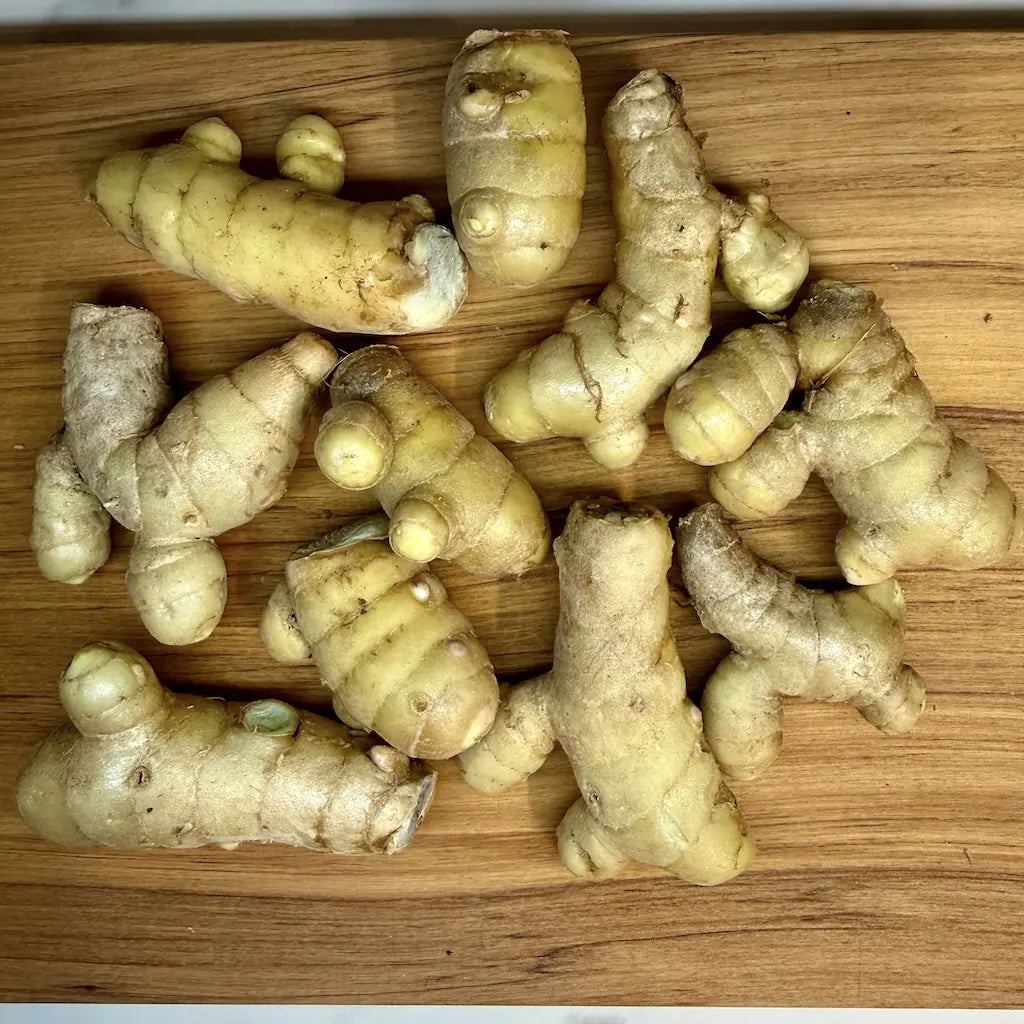
Black Turmeric (Curcuma caesia) is the rarest member of the turmeric family
— recognised instantly by its inky blue-black flesh when cut and its bold burgundy leaf stripe.
One of the rarest rhizomes you'll grow — organically harvested on Tamborine Mountain, straight to your garden.
Known in Ayurvedic tradition as Kali Haldi, it has been prized across South and Southeast Asia for centuries for its distinctive camphoraceous aroma and its place in the kitchen, the herb garden, and traditional practice. Our rhizomes are grown organically on the farm — no sprays, no synthetic inputs — harvested fresh each June to September from our subtropical mountain gardens and dispatched quickly so they arrive in peak condition, ready to plant.
What Makes This Variety Special
Slice a rhizome and the deep blue-black interior is immediately striking — a visual marker that sets C. caesia entirely apart from golden turmeric.
Intense and aromatic with a distinctive camphor-forward scent and bitter edge — used sparingly fresh or dried in curries, teas, and spice pastes across northeast India.
Grows to 1.2–1.8m with broad glossy leaves carrying a deep violet-red stripe through each blade. Produces vivid deep-pink to red flower bracts in summer.
Rhizomes are harvested after the plants enter dormancy — the ideal window for lifting, packing, and replanting. Available seasonally while stocks last.
Grown at altitude in Scenic Rim, QLD — rich volcanic soils, subtropical rainfall, and no sprays from planting to harvest.
Use fresh rhizome grated into broths and pastes, thinly sliced into teas, or dry and grind for a richly aromatic spice powder with a pungent, bitter profile.
What You Can Expect
- Firm, healthy rhizomes with visible growth nodes — ready to plant directly on arrival
- Striking blue-black interior when cut — a strong indicator of authentic Curcuma caesia
- Rapid establishment in warm subtropical and tropical conditions; slower but reliable in warm temperate gardens
- Bold ornamental foliage by mid-spring, with spectacular flowering bracts through summer
- Perennial returns — once established, the clump expands each season and can be divided at each winter harvest
- A genuinely rare plant that is extremely difficult to source as a quality, farm-grown Australian rhizome
What the Research Says
Curcuma caesia is a member of the Zingiberaceae family, native to northeast and central India, where it is classified as a rare and endangered species in the wild. Its rhizome essential oil profile is distinct from common turmeric (C. longa) — major GC-MS identified constituents include camphor (up to 28%), ar-turmerone, curzerenone, eucalyptol, and borneol. Traditional Ayurvedic and Unani systems documented its use across respiratory, digestive, and inflammatory conditions. Modern pharmacological research (Springer, NCBI) has confirmed antioxidant, antimicrobial, and anti-ulcer activity in laboratory studies. Note: we make no therapeutic claims — this information is shared for educational and historical context only. Research the preparation of this plant before culinary or traditional use, as the raw rhizome is bitter and can be intense.
Planting & Growing Guide
| Stage | What to Do |
|---|---|
| When to Plant | Sep–Oct Plant rhizomes in early spring once soil temperatures reach 18°C or above. In subtropical QLD, this is typically September. In cooler climates, wait until October or start in pots indoors. |
| Planting Depth & Spacing | 5–7 cm deep 30–45 cm apart Plant with growth nodes facing upward. In pots, use a container at least 30 cm deep and 30–45 cm wide per rhizome. |
| Soil | Rich, free-draining soil with good organic matter. Avoid clay-heavy or waterlogged soils — black turmeric dislikes wet feet and will rot in poor drainage. Raised beds and mounded garden beds work well. |
| Mulch Heavily | 10 cm+ Apply a generous layer of organic mulch — sugarcane, woodchip, or straw — over the planting area. This retains moisture, regulates soil temperature, and feeds the soil biology that black turmeric thrives in. Replenish mulch through the growing season. |
| Sunlight | Full sun to part shade. In hot inland climates, afternoon shade will protect the large leaves. On the coast and in subtropical gardens, full sun is ideal. |
| Watering | Water regularly through the warm growing months — consistent moisture (not waterlogged) encourages strong rhizome development. Reduce watering significantly once foliage dies back in autumn, and keep largely dry through winter dormancy. |
| Fertilising | Monthly Feed regularly with a balanced liquid organic fertiliser through the growing season (October–April). A seaweed-based or fish emulsion feed every 3–4 weeks promotes lush foliage and strong rhizome formation. Side-dress with compost in early spring. |
| Winter Dormancy | Foliage will yellow and die back as temperatures cool — this is natural. Leave rhizomes in the ground or lift, dry, and store in a cool dry place. Lift and divide clumps every 1–2 years to maintain vigour. |
| Harvest | 8–10 months Harvest once the stems dry and foliage has fully died back — typically June to August. Carefully dig the entire clump, remove what you need, and replant the remainder. Each clump will multiply significantly season-on-season. |
| Culinary Use | Grate fresh rhizome sparingly into curries, broths, or stir-fries. Slice thinly and steep in hot water for a traditional tea. Dry and grind to powder for use as a spice. Note: the raw rhizome is significantly more bitter and pungent than golden turmeric — research preparation methods and use in small quantities initially. |
Product Details
Botanical name: Curcuma caesia Roxb. (syn. Curcuma kenchoor)
Common names: Black Turmeric, Kali Haldi, Black Zedoary, Blue Turmeric
Family: Zingiberaceae
Origin: Tamborine Mountain, Scenic Rim, Queensland, Australia
Growing method: Organically grown, no synthetic sprays or fertilisers
Form: Fresh dormant rhizomes — firm, whole, with visible growth nodes
Rhizome size: Individual rhizomes typically 23–40g each
Pack sizes: 50g (approx. 1–2 rhizomes) / 100g (approx. 3–4 rhizomes) / 250g (approx. 6–8 rhizomes)
Availability: Seasonal — June to September only, while stocks last
Climate: Tropical, subtropical, warm temperate (frost-free preferred)
Mature height: 1.2–1.8m
Sun: Full sun to part shade
Shipping: QLD, NSW, VIC, SA, ACT only. Cannot ship to WA, TAS, or NT.
Kai Kai Farm sits on Tamborine Mountain in Queensland's Scenic Rim — volcanic soils, subtropical altitude, and a farming philosophy built around working with biology rather than against it. We grow our black turmeric the same way we grow everything on the farm: organically, patiently, and with a focus on soil health first. No sprays, no synthetic inputs — just good compost, heavy mulching, and the kind of attention that only a small family farm can give.
Black turmeric is one of those plants we grow for the love of it. It's rare, it's striking, and it produces generously once established in the right conditions. We harvest each winter, pack fresh, and dispatch quickly so you receive rhizomes in the best possible condition. Each pack is a piece of the mountain — something genuinely uncommon in Australian gardens.
Learn more about Kai Kai Farm →

