


Reishi Mushroom - 2.2KG Ready To Fruit Block
Reishi Mushroom - 2.2KG Ready To Fruit Block
First harvest of 500-600g in 1-2 weeks · Instructions and guide included · Dispatches in 1–2 business days if in stock · 4+ blocks made to order in 2 weeks
5.0 / 5.0
(1) 1 total reviews
Couldn't load pickup availability
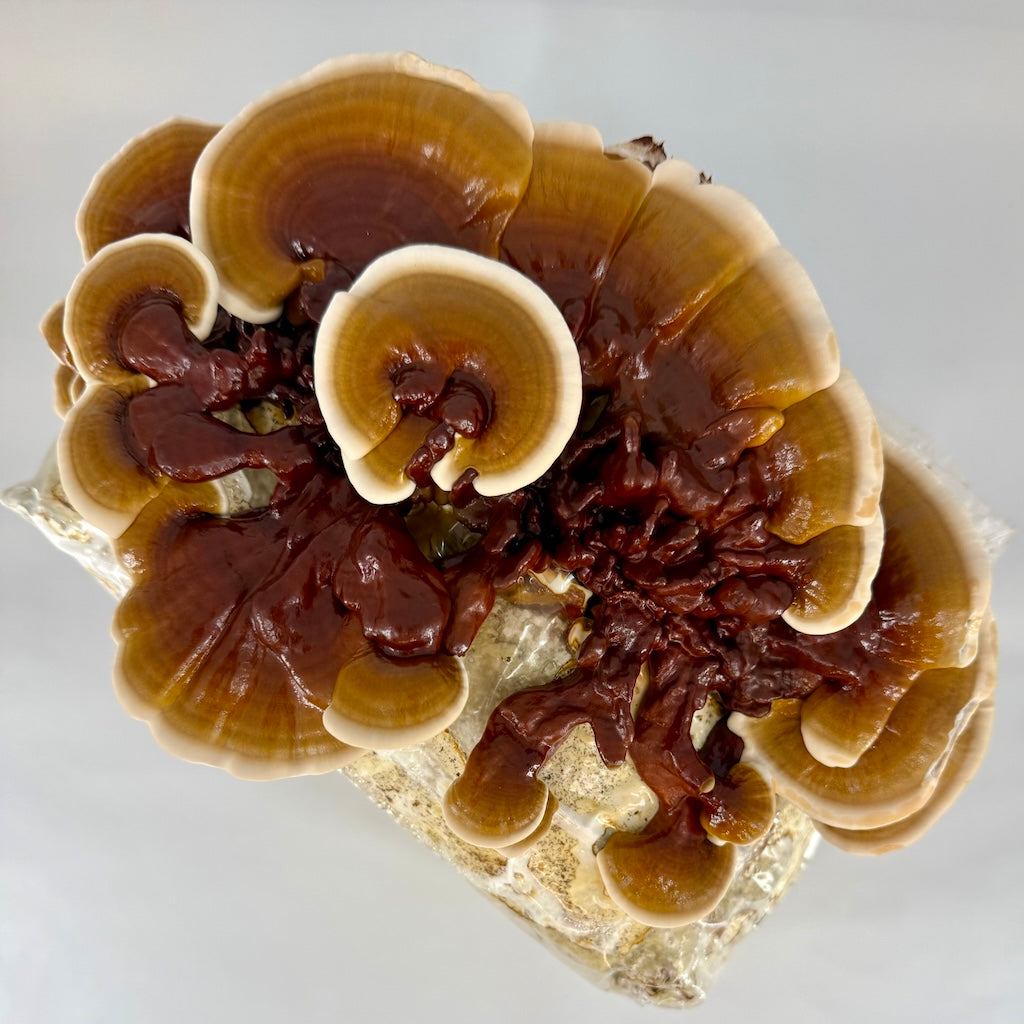
Most mushrooms are grown to be eaten. Reishi is different. Ganoderma steyaertanum — Australia's native Reishi species — is a slow, deliberate grower that produces woody, lacquered fruiting bodies used for teas, tinctures, and adaptogenic preparations rather than the kitchen pan. It's also the only commercial block in our range that doubles as a genuine CO₂ generator for indoor plant or mushroom growing environments.
Yield and harvesting: Reishi is a patient grow. Antler-like primordia appear within 2–4 weeks under the right conditions, with full cap development taking several weeks more. Yield is typically 300–400g for first flush; the block produces up to 4 flushes with sufficient rest between harvests. Once dried, fruiting bodies last indefinitely as a tea or tincture ingredient — brew 20–30g per 500ml, simmer 20–25 minutes. The flavour is earthy and bitter, pairing well with honey or ginger.
As a CO₂ generator: Actively fruiting Reishi blocks produce significant CO₂ as a byproduct of respiration. Remove the filter patch tape and position the block in your grow space — a single block can meaningfully elevate CO₂ levels in a small tent or grow room without a dedicated generator.
Growing conditions: 22–28°C, moderate humidity, indirect light. Reishi prefers warmer conditions than oyster varieties and is naturally suited to Queensland's subtropical climate. Patience is the primary skill required — and it's rewarded.
Express post and bulk ordering
We strongly recommend express post during summer months to minimise heat exposure in transit. Add the Express Post Addon to your order with a quantity matching your block count. Orders of 4 or more blocks of an individual variety are made to order and may take up to 2 weeks. We'll confirm your estimated shipping date once the order is placed.
Why choose Kai Kai Farm commercial blocks
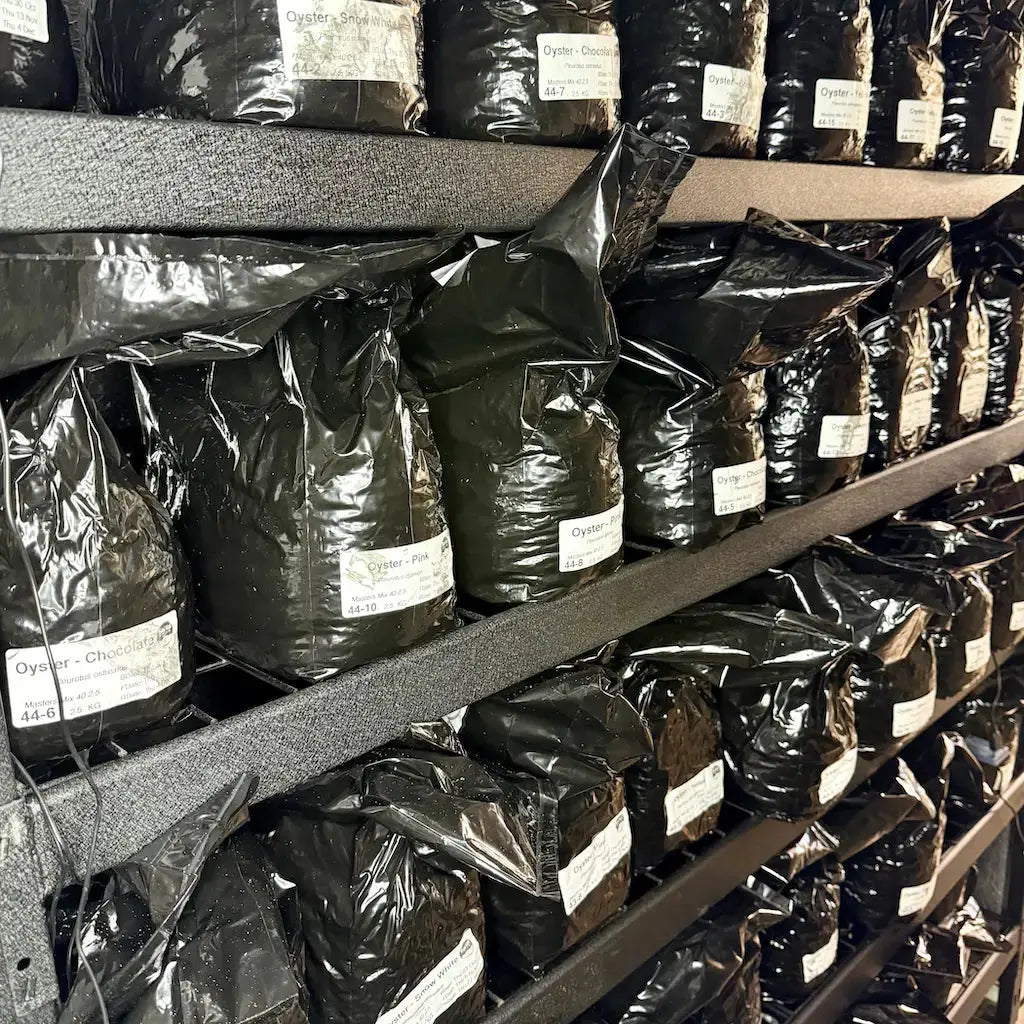
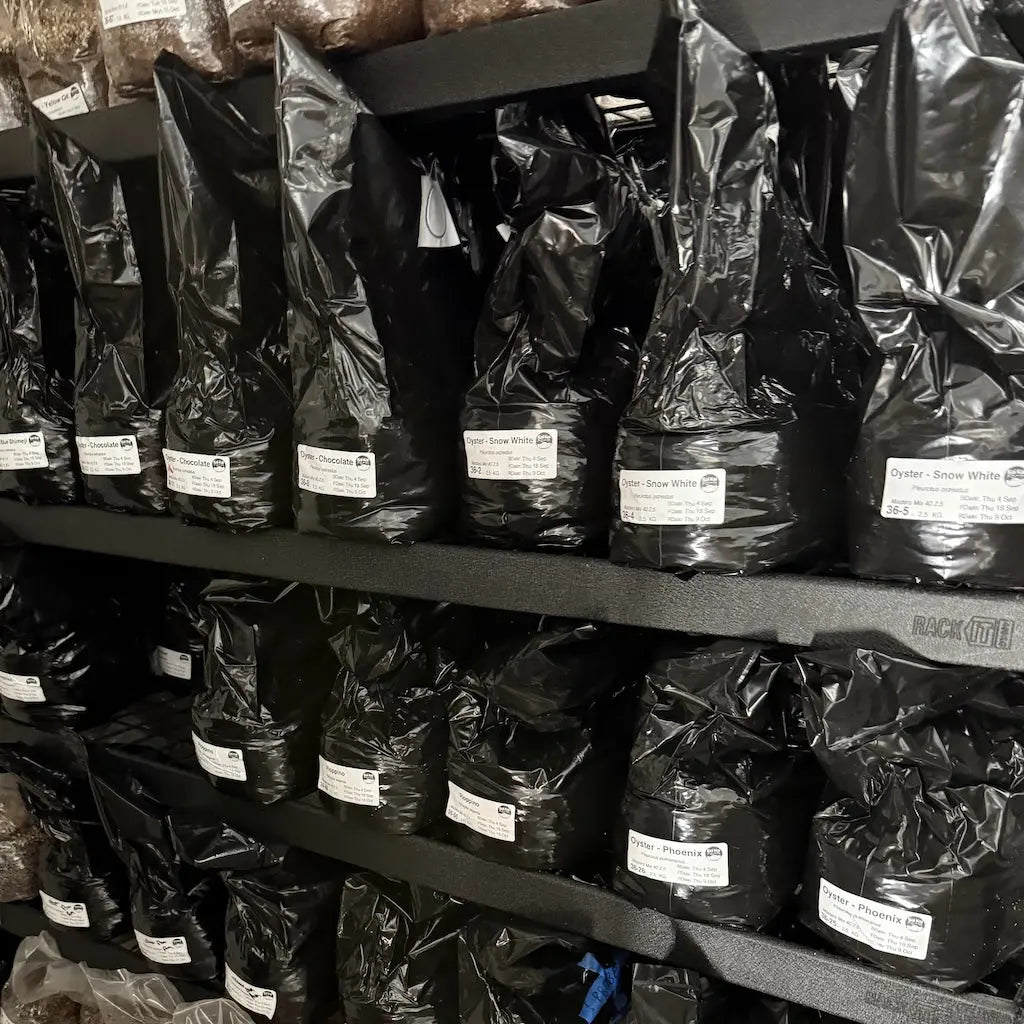
We're not resellers — we're growers. Every block is prepared, sterilised, and colonised right here at Kai Kai Farm on Tamborine Mountain, using methods refined through years of commercial gourmet and medicinal mushroom production. Consistent performance batch-to-batch, verified contamination-free cultures, and full transparency from substrate to shelf.
Storage and handling
If you can't fruit immediately, store in a cool, dark place under 18°C for up to 2 weeks. Handle gently — the mycelium is alive and ready to fruit.
Perfect for
Small commercial farms and start-ups. Market gardeners and farm-to-table producers. Home growers scaling up. Restaurants and chefs looking to harvest unique produce on-site. Workshops and educational demonstrations.
What's Included
What's Included
We’re not resellers — we’re growers - Every block is prepared, sterilised, and colonised right here at Kai Kai Farm, using methods perfected through years of gourmet mushroom production.
That means:
• Consistent performance batch-to-batch
• Verified clean, contamination-free cultures
• Fast turnaround and local pickup options
• Full transparency from substrate to shelf
Why Choose Our Blocks?
Why Choose Our Blocks?
• Fresh from Production: Pulled directly from our farm’s controlled environment — never stored for long periods.
• Fully Colonised & Ready to Fruit: Each block arrives white, dense, and vigorous, ready to cut and grow within days.
• High-Yield Formula: Nutrient-balanced mix of Australian-grown agricultural inputs designed for strong fruiting performance.
• Consistent Quality: Same recipe, hydration, and sterilisation method used in our own commercial grows.
• Perfect for Scaling Up: Whether you’re producing 5 kg a week or 50 kg, these blocks offer predictable growth and easy management.
• Perfect for fool proof CO2 generation for indoor plants. Completely silent and no power required!
Mushroom Profile
Mushroom Profile
• Weight: 2.2 kg each
• Type: Fully colonised ready-to-fruit commercial mushroom grow block
• Species: Varies by batch (e.g. Oyster, Lion’s Mane, Reishi — see dropdown for current availability)
• Format: Sealed filter bag with 0.5 µm patch
• Origin: Made fresh in Tamborine Mountain, QLD
Growing Information
Growing Information
• Reishi - Grow in the bag as antlers or cut horizontal slits and allow the reishi to grow as brackets.
• Place in a humid environment (e.g. greenhouse, grow tent, or shaded area).
• Mist daily and maintain airflow.
• Harvest and repeat — most blocks produce multiple flushes.
Pro tip: Pair your blocks with a small humidity tent or fruiting chamber for optimal yield and shape.a
More Growing Information:
Delivery Information
Delivery Information
- Ships from Tamborine Mountain, QLD, Australia via either AusPost or Aramex
- Fast dispatch within 1 business day if in stock (excluding Fridays) otherwise will be made to order and ready in approximately 14 days




Hand-Grown on Tamborine Mountain
At Kai Kai Farm, we don't just sell kits and tonics—we use them every day. Founded by Quintin and Amy in the heart of the Scenic Rim, our mission is to make professional-grade mushroom cultivation and sustainable gardening accessible to everyone. From our no-spray gourmet mushrooms to our bio-active soil health range, every product is tested right here on the farm to ensure your growing journey is a success. When you shop with us, you’re supporting a local family business dedicated to a greener, more delicious planet.
Customers are saying

Looking For Something Else?
Unleash your Inner Fun Guy (or Gal) with Our Mushroom Kits!

Support Local

Sustainable, Organic, Spray Free

Family Owned