



Hardwood & Organic Bran Mix For Mushroom Substrate
Hardwood & Organic Bran Mix For Mushroom Substrate
Couldn't load pickup availability


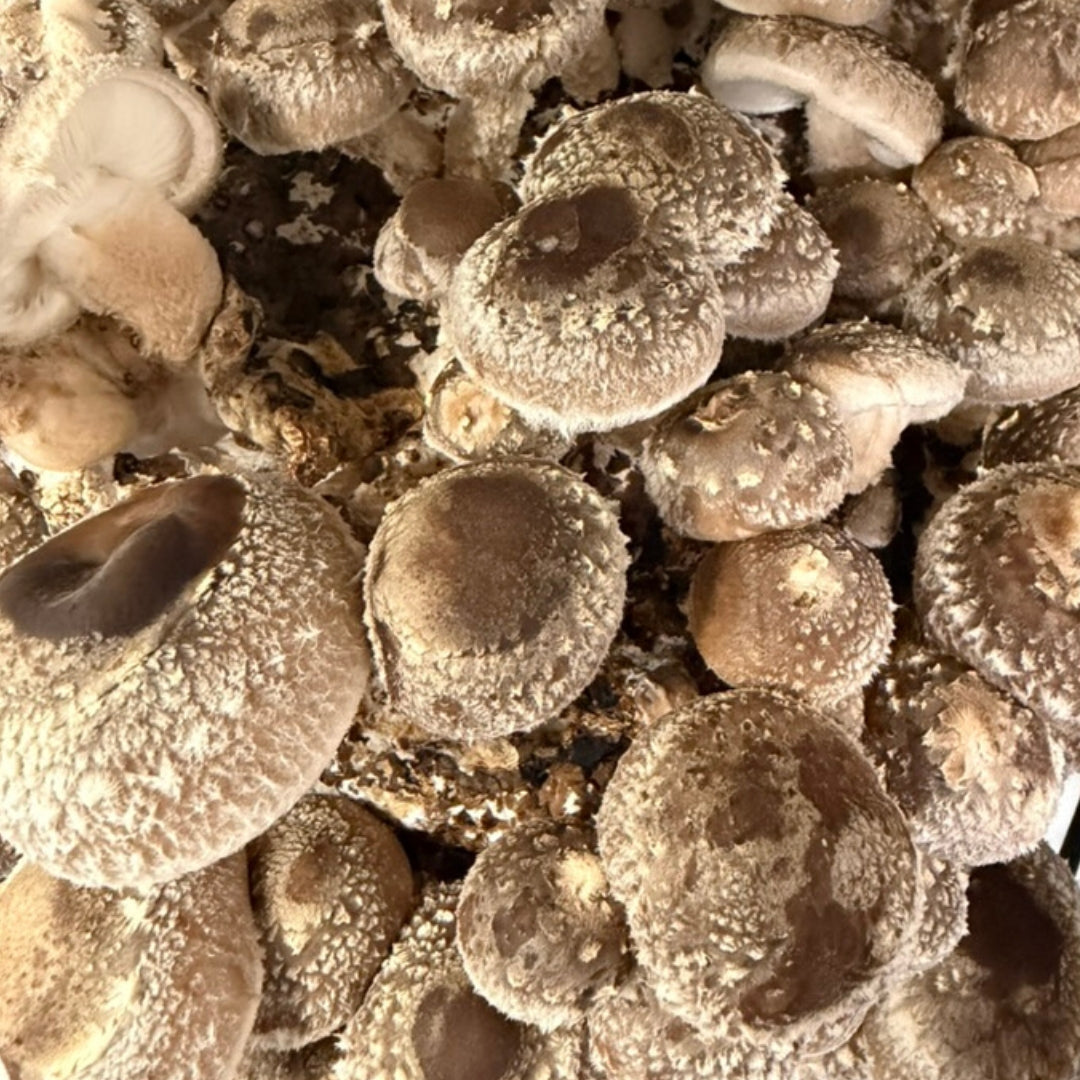


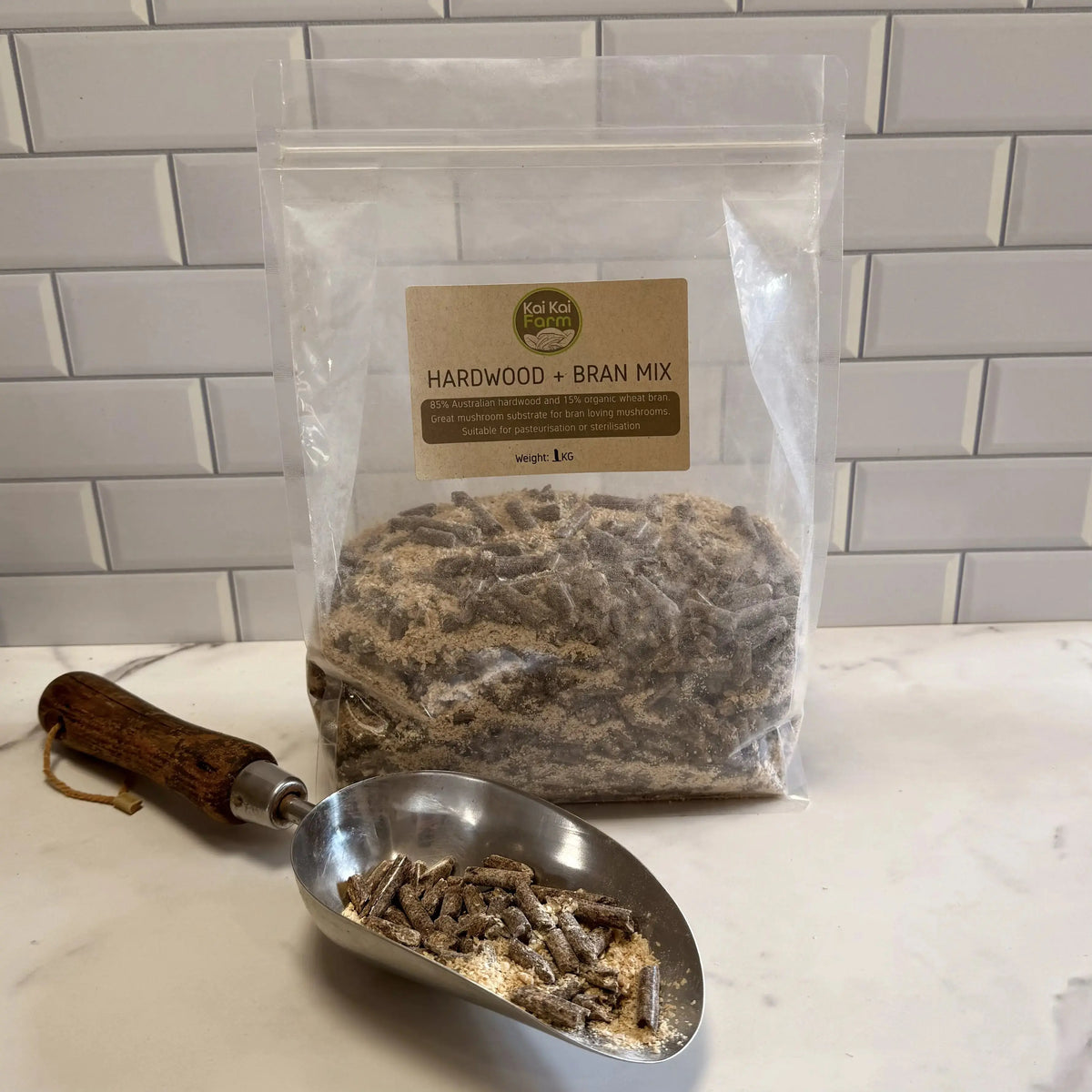
The classic hardwood-and-bran block recipe for shiitake and reishi — pre-weighed, pre-blended, ready to hydrate.
This is a ready-to-hydrate supplemented sawdust substrate: 80% Australian hardwood and 20% organic wheat bran by dry weight, with gypsum added at 5%. It’s the time-tested formula for wood-loving species that want more nutrition than plain hardwood can give them — shiitake and reishi in particular — and it adapts easily for turkey tail.
We blend it from the same 100% Tasmanian Oak hardwood pellets we use in our own production on Tamborine Mountain. No weighing out bran, no sourcing gypsum, no guessing ratios. Add water, bag it, sterilise, inoculate.
What’s in the mix — and why
Australian hardwood — 80%
The structural base100% Tasmanian Oak hardwood pellets — Australian grown and manufactured, with no glues, binders or additives. Hardwood provides the cellulose, hemicellulose and lignin that wood-decomposing species are built to digest, plus the open, airy texture mycelium needs for gas exchange.
Organic wheat bran — 20%
The nitrogen boostPure hardwood is low in nitrogen. Bran adds protein, starches and minerals that fuel faster, denser colonisation and heavier flushes. 20% is the long-standing standard supplementation level for shiitake and reishi blocks — enough to feed the mycelium without tipping the substrate into contamination territory.
Gypsum — 5% of dry weight
Calcium, sulphur, better textureGypsum (calcium sulphate) supplies calcium and sulphur, and helps keep a bran-rich substrate from clumping and going pasty once hydrated. The result is a looser, more even substrate that the mycelium can move through cleanly. It’s already mixed in — nothing to add.
Blended on our farm
The same mix we fruit onThis isn’t a theoretical recipe. The shiitake and reishi in our product photos were grown on this exact blend. If a batch doesn’t colonise and fruit properly in our own grow room, it doesn’t go in the bag.
What you’ll notice
- Dense, well-knit blocks that hold together through the long colonisation shiitake and reishi need
- Stronger flushes than plain hardwood — the bran gives the mycelium the reserves to fruit hard
- Consistent results batch to batch — the ratio is fixed, so your only variables are water and technique
- Less time at the bench — no weighing bran, no sourcing gypsum, no mixing three separate ingredients
- An easy route to turkey tail too — cut it 50/50 with plain hardwood pellets and you’re at the right bran level
Why supplement hardwood at all: Wood is mostly carbon. In nature, wood-decomposing fungi take months or years to extract enough nitrogen from a log to fruit. Adding bran shortcuts that — it supplies readily available nitrogen, sugars and minerals, so the mycelium builds biomass faster and has more stored energy when it’s time to fruit. That’s why supplemented sawdust blocks outyield plain sawdust for species like shiitake and reishi.
Why more isn’t always better: The same nutrients that feed your mycelium also feed bacteria and moulds. Every step up in bran makes the substrate richer for competitors as well, which is why supplemented sawdust must be fully sterilised, and why each species has a sweet spot. 20% suits shiitake and reishi. Turkey tail is adapted to leaner wood and does best at around 10% — higher than that adds contamination risk without much benefit.
How to prepare your substrate
Hydrate → bag → sterilise → cool → inoculate
Hydration ratios — 80/20 hardwood & bran Preparation steps⚡ Pressure cooking
Pressure cooker or autoclave at 15 PSI — 90–120 minutes
The most reliable option for home growers. Time the run from when the cooker reaches full pressure, use the longer end of the range for bigger bags or full loads, and let the cooker depressurise naturally rather than venting it.
♨️ Steam sterilisation
Steam at 90°C — at least 60 minutes
Ideal for larger batches that won’t fit in a pressure cooker — a steam drum, steam box or barrel steamer all work. The 60 minutes starts once the centre of the bags reaches 90°C, not when the steam starts, so allow extra warm-up time for full loads.
Don’t skip the heat treatment. Bran makes this a nutrient-rich substrate, and an untreated or under-treated bag will feed bacteria and mould as readily as your mycelium. Whichever method you use, let bags cool completely before inoculating.
Which mushrooms this mix is made for
Three wood-loving species that reward a supplemented hardwood block.
♻️ Don’t throw away your spent blocks
Once your blocks have finished fruiting, they’re far from waste. Partly digested hardwood and bran makes an excellent compost ingredient — the mycelium has already started breaking down the lignin and cellulose, so soil organisms can get to work faster than on fresh woodchip. Crumble spent blocks into the compost heap, use them as a moisture-holding mulch around trees and shrubs, or dig them into garden beds to improve structure. A closed loop from grow room to garden.
Kai Kai Farm is a family operation run on Tamborine Mountain in Queensland’s Scenic Rim. We grow gourmet mushrooms commercially and supply the growing community with the same substrates, bags and inputs we use in our own production.
Shiitake and reishi taught us that plain hardwood only gets you so far. We settled on this 80/20 hardwood and bran blend with gypsum after running it through our own sterilisation and fruiting rooms, and it’s now the base we use for those species ourselves. Pre-blending it saves you the fiddly part and takes the guesswork out of the ratios.
Whether you’re running a single bag in a stovetop pressure cooker or a full steam drum, this is the mix we’d hand you for shiitake and reishi. It’s the mix we use.


