


Oyster Mushroom 'Blue' - 2.2KG Ready To Fruit Block
Oyster Mushroom 'Blue' - 2.2KG Ready To Fruit Block
Couldn't load pickup availability


The most cold-hardy oyster in the range — thriving exactly when the others slow down.
Blue Oyster (Pleurotus ostreatus) is the classic cool-season oyster — prized by commercial growers for thick, meaty caps, steel-blue colouring and rock-solid performance right through the cold months when other varieties struggle to fruit cleanly. It's a close cousin of Pearl Oyster, but bred for the cold: where Pearl tops out around 22°C, Blue Oyster keeps pinning and fruiting down to 12°C.
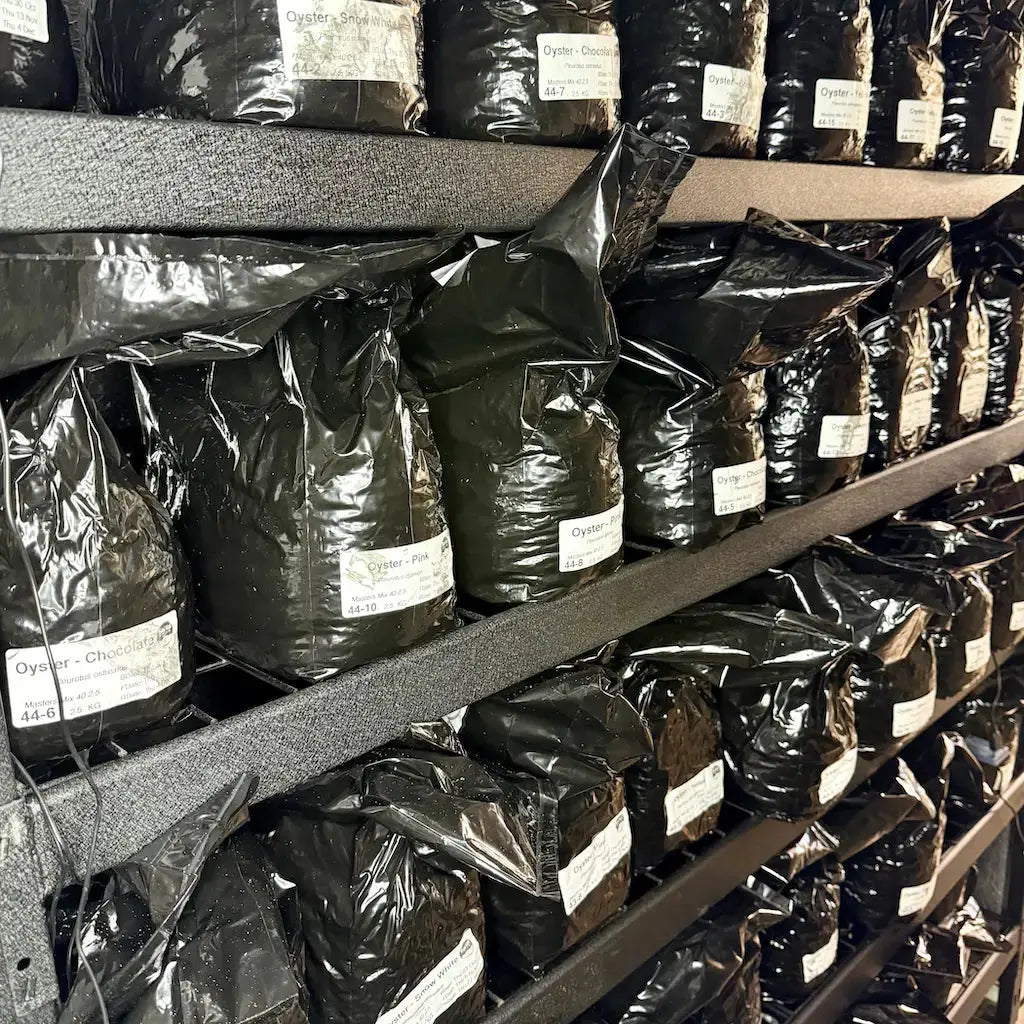
This is a 2.2 KG ready-to-fruit block: fully colonised, sealed, and ready to pin as soon as you cut it open. Grown, sterilised and colonised right here on Tamborine Mountain on our own hardwood + soy hull Masters Mix — not imported, not repackaged, not resold. Cut an X, keep it humid, and you'll have mushrooms in about a week.
Why Blue Oyster earns a spot in the range
Built for the cold
Fruits cleanly down to 12°C.Where most oyster strains stall out below 16°C, Blue Oyster keeps pinning and fruiting through the coldest part of autumn, winter and early spring. If you're growing outdoors or in an unheated space over winter, this is the block that keeps producing when others won't.
Thick, meaty caps
Denser flesh than Pearl.Blue Oyster caps are noticeably thicker and meatier than Pearl's — steel-blue to slate-grey when young, softening to grey-brown as they mature. The extra density holds its shape better under searing, grilling and heavier cooking methods.
Firm, savoury flavour
Richer than Pearl, meatier than Shimeji.Where Pearl is mild and Blue Shimeji leans nutty, Blue Oyster brings a firmer bite and a deeper, more savoury flavour — closer to a meat substitute than a delicate garnish. A favourite with chefs building plant-based mains.
Grown and colonised on-farm
Not repackaged. Grown here.Every block is mixed, sterilised and colonised at Kai Kai Farm on our own hardwood + soy hull Masters Mix — the same substrate we fruit commercially. Verified contamination-free, consistent block to block, and packed to order rather than sitting in a warehouse.
What you'll notice
- Pins forming within about a week of cutting the bag, even in cool conditions that would stall other varieties
- A dense first flush of thick, steel-blue-grey caps — 500–600 g under good conditions
- Multiple harvests from a single block — keep the humidity up and re-flush up to four times
- Firm, savoury mushrooms that sear, grill and braise better than most oysters
- The most cold-tolerant grow in the range — ideal for outdoor or unheated winter growing spaces
Why Masters Mix drives strong oyster yields: Hardwood provides the lignocellulosic backbone — the cellulose, hemicellulose and lignin that oyster mycelium evolved to digest. The soy hull fraction adds readily available nitrogen and protein, which fuels denser mycelial growth and heavier flushes than pure hardwood alone. Every block is sterilised and fully colonised in controlled conditions before it leaves the farm, so the mycelium arrives established and primed — all it's waiting for is air, light and moisture.
Why Blue Oyster fruits at lower temperatures: The columbinus strain carries genetics selected over generations to pin and develop proper fruiting bodies well below the range most oysters need — without the misshapen caps or long, thin stems that cold weather causes in warm-adapted strains. That's why it keeps producing cleanly through the months when Pearl and other standard oysters slow right down.
How to fruit your block
Site it → cut an X → keep it humid → harvest pre-curl → rest → re-flush
Fruiting conditions at a glance
Step by step
What to expect from each flush
🍳 In the kitchen
Firm, meaty and savoury, with noticeably thicker flesh than Pearl or Snow White. Best cooked rather than eaten raw — it sears beautifully, holds its shape in stir-fries and soups, and works well as a plant-based meat substitute. Some cooks pick up a faint umami or mild seafood note when it's pan-seared hot in butter. Cook it hot and fast for a firm bite, or slow-braise for a heartier, richer dish.
Storage & handling
Perfect for
What's inside the block
~2.2 KG block, sterilised and fully colonised with Blue Oyster mycelium before dispatch. No fillers, no additives — just substrate and mycelium.
More ready-to-fruit blocks
The Kai Kai Farm story
Kai Kai Farm is a family operation on Tamborine Mountain in Queensland's Scenic Rim. We grow gourmet mushrooms commercially — oysters, lion's mane, pioppino, chestnut — and we sell blocks cut from the same production we fruit ourselves.
We're growers, not resellers. Every block is mixed, sterilised and colonised here on the mountain, using methods refined over years of commercial gourmet and medicinal mushroom production. What arrives at your door is genuinely fresh — inoculated, colonised and packed to order, with verified contamination-free cultures and full transparency from substrate to shelf.
Whether you're fruiting one block on a kitchen bench or running a rack of them through a market garden, this is the block we grow ourselves. It's the one we'd hand a first-timer, and the one our commercial buyers keep coming back for.

