

Bokashi Bran Mix - Organic Compost Activator For Kitchen Waste
Bokashi Bran Mix - Organic Compost Activator For Kitchen Waste
Couldn't load pickup availability
Compost everything. Even the stuff other systems won’t touch.
Bokashi is the only home composting method that handles your entire kitchen output — meat, fish, dairy, cooked food, citrus, bread, even small bones. No outdoor space required, no odour, no fruit flies. Just an airtight bin, a handful of bran, and two to four weeks of fermentation science working quietly on your bench.
Our Bokashi Bran is made in small batches on Tamborine Mountain using certified organic wheat bran and authentic EMRO EM-1 microorganisms — the original effective microorganism culture developed by Professor Teruo Higa. Small-batch production means every bag you receive is biologically alive and at peak microbial potency, not sitting in a warehouse slowly declining.
What’s inside — and why it matters
Organic wheat bran
The fermentation carrierWheat bran has an ideal surface-area-to-weight ratio for microbial inoculation — billions of EM organisms colonise every gram of bran, ready to activate the moment they contact food waste and moisture. It’s the delivery mechanism that makes the whole system work.
Activated EMRO EM-1®
The microbial engineWe use authentic EMRO EM-1 — the original effective microorganism culture developed by Professor Teruo Higa at the University of the Ryukyus. This consortium of lactic acid bacteria, yeasts and phototrophic bacteria drives the anaerobic fermentation that breaks down all kitchen waste without rotting or odour.
Organic molasses
The microbial food sourceA carbon-rich food source that sustains EM cultures through the fermentation and inoculation process, keeping microbes active and multiplying. Molasses also acts as a natural preservative during storage, extending the shelf life of the bran without synthetic additives.
Pine sawdust + Organic gypsum
The structure buildersPine sawdust gives the bran a free-flowing texture that distributes evenly across food scraps and prevents compaction in the bin. Organic gypsum adds bioavailable calcium — inert during fermentation but released when the pre-compost is buried, improving soil structure and supporting strong root development.
What you’ll notice
- A mild, pleasant vinegar or pickled smell — a healthy sign fermentation is active
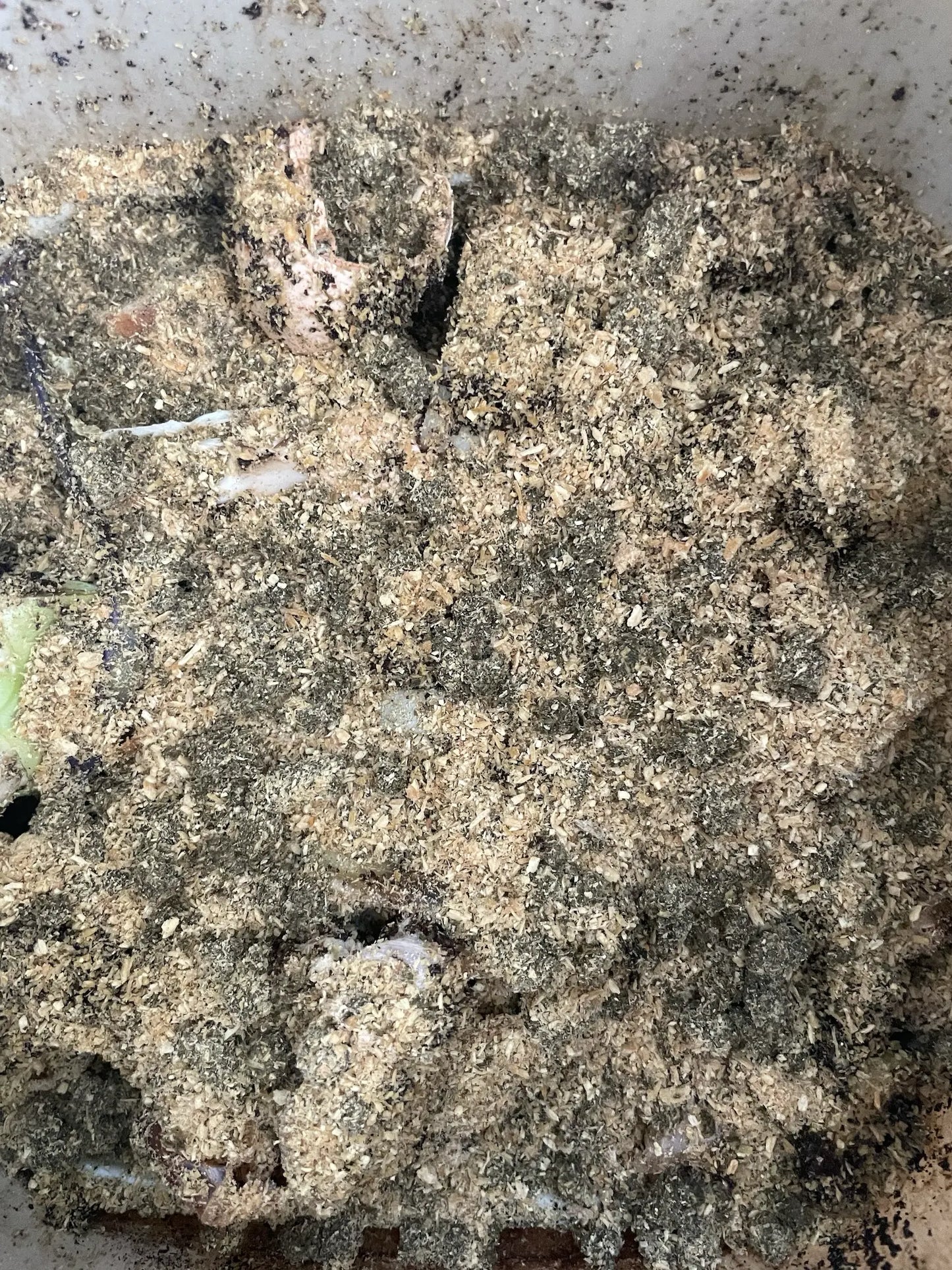
- White fluffy growth on the surface of your scraps (not mould — beneficial yeast colonies at work)
- Bokashi tea (liquid fertiliser) draining from the tap within the first few days
- Food scraps fully fermented and ready for the garden in 2–4 weeks, not months
- Visibly richer, more active soil in garden beds where pre-compost is buried
- Zero food waste going to landfill — including the scraps other systems won’t accept
Fermentation vs decomposition — why it matters: Traditional composting relies on aerobic decomposition: organic matter breaks down through bacterial activity in the presence of oxygen. This process takes months, generates heat, and cannot handle meat or dairy without creating odour and attracting pests. Bokashi uses anaerobic fermentation instead — the same process behind sourdough, kimchi and yoghurt. The EM consortium pickles food waste in an oxygen-free environment, halting putrefaction and preserving nutrients rather than burning them off as heat. The result is a pre-compost that is acidic, stable, odour-free and packed with microorganisms ready to colonise your soil.
Why small-batch production matters: EM-1 cultures are living organisms. Large-scale manufacturers often prioritise shelf stability and volume over microbial vitality — resulting in bran that may have lost significant biological activity by the time it reaches your kitchen. Our small-batch process means your bran is freshly inoculated, with a measurably higher microbial count and more diverse EM culture than mass-produced alternatives can reliably guarantee.
How to use your Bokashi Bran
The full cycle: bin → ferment → garden
In the bin
Using the bokashi tea (liquid fertiliser)
🌿 Garden & pot plants
Dilute 1:10010 mL per litre of water (roughly 1 teaspoon per litre). Apply to soil, not directly onto leaves. Never apply undiluted — the acidity will burn roots.
🚿 Drains & toilets
Use undilutedPour a small amount directly down sinks, drains or toilets to break down organic buildup and reduce odours in your plumbing. Safe for septic systems.
Finishing in the garden
🕳️ Bury directly — Dig a trench or hole 10–20 cm deep, fill with pre-compost, cover with soil. Keep away from direct root contact. Fully broken down within 2–4 weeks, leaving behind rich, microbially-active soil.
🔄 Add to a compost pile — Mix into an existing compost bin or heap. The EM-1 organisms will accelerate decomposition of the whole pile. Fully mature in 2–4 weeks.
Why bokashi?
How it compares to other home composting methods
| Bokashi bran | Worm farm | Compost bin | |
|---|---|---|---|
| Accepts meat & dairy | ✅ | ❌ | ❌ |
| Odour-free indoors | ✅ | ⚠️ Usually | ❌ |
| Works in apartments | ✅ | ⚠️ Sometimes | ❌ |
| Produces liquid fertiliser | ✅ | ✅ | ❌ |
| Ready in under 4 weeks | ✅ | ❌ | ❌ |
| No pest or fly risk | ✅ | ⚠️ Sometimes | ❌ |
| No outdoor space needed | ✅ | ⚠️ Sometimes | ❌ |
Storage
Organic Wheat Bran, Activated EMRO EM-1®, Organic Molasses, Pine Sawdust and Organic Gypsum.
Common questions
What does a healthy bokashi bin smell like?
A healthy bin should have a mild, sweet or vinegary smell — similar to sourdough, pickles or apple cider vinegar. This means fermentation is working correctly. White fluffy growth on the surface is a good sign — it’s beneficial yeast activity. Foul, rotting smells indicate the bin isn’t sealed properly, too much liquid has accumulated, or insufficient bran was used.
Can I really put meat, fish and dairy in?
Yes — this is one of bokashi’s biggest advantages over worm farms and traditional compost bins. Virtually all kitchen waste is accepted: raw and cooked meat, fish scraps, dairy, eggs and shells, bread, citrus peels and small bones. Avoid large bones and excessive cooking oil.
How do I use the bokashi tea?
Dilute at 1:100 with water (10 mL per litre, or roughly 1 teaspoon per litre) before applying to plants, lawn or soil. Never apply undiluted to plants as the acidity will burn roots. You can also pour small amounts undiluted down drains and toilets to break down organic matter and reduce plumbing odours — safe for septic systems.
My bin smells bad. What’s gone wrong?
The most common causes: (1) lid not fully sealed after each addition, (2) liquid not drained frequently enough, (3) too little bran used per layer. Black or green mould — rather than white — is a sign of contamination. Try adding extra bran, draining the tea and ensuring an airtight seal. If the batch is beyond saving, bury it deeply (40+ cm) and start fresh.
How long before the buried pre-compost is safe for plants?
The pre-compost is still acidic when it comes out of the bin and should not contact plant roots directly. Buried at 10–20 cm depth, it will fully break down within 2–4 weeks depending on soil temperature and moisture. After that, the surrounding soil will be noticeably richer and more biologically active.
More questions? Visit our full Bokashi FAQ guide →
The Kai Kai Farm storyAt Kai Kai Farm, we believe that food waste is the wrong name for it. It’s future soil. Founded by Quintin and Amy on Tamborine Mountain in the heart of Queensland’s Scenic Rim, we make our Bokashi Bran in small batches to ensure every bag leaves us biologically alive — not sitting in a warehouse waiting to slowly lose potency.
We use authentic EMRO EM-1 — the original effective microorganism culture, not a generic probiotic substitute — and certified organic wheat bran sourced without compromise. Every ingredient is chosen because it makes the fermentation better, not because it makes the product cheaper to produce.
When you buy from Kai Kai Farm, you’re supporting a local family business and choosing a product made with the same care we put into our own garden. We think your kitchen scraps deserve that.
Why Customers Love Us
 Australian Owned
 Family Business
 Sustainability