


Shiitake 3790 Mushroom - 2.2KG Ready To Fruit Block
Shiitake 3790 Mushroom - 2.2KG Ready To Fruit Block
Couldn't load pickup availability


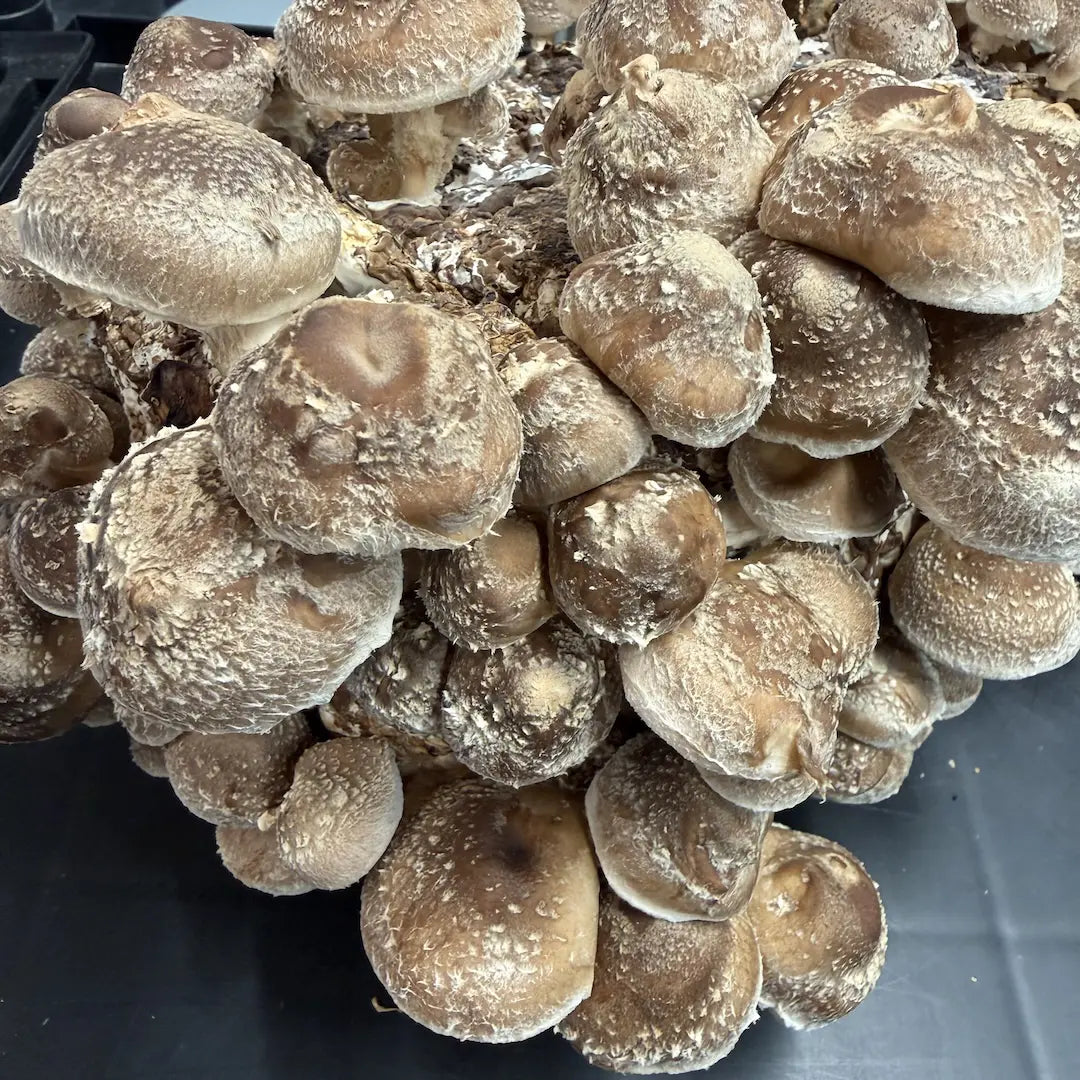
Up to twelve weeks on our racks before it reaches you — so all you have to do is soak it and wait for the caps.
Shiitake (Lentinula edodes) is the most widely grown gourmet mushroom in the world, and the slowest block we produce. Before a shiitake block will fruit, the mycelium has to fully colonise the substrate, mature, and grow its own brown protective skin. That takes 10–12 weeks, compared with just a few weeks for an oyster. We do all of that waiting here on the farm.
This is a 2.2KG ready-to-fruit block: fully colonised, fully browned, and sealed in its bag. Grown, sterilised and matured right here on Tamborine Mountain on hardwood with organic certified wheat bran — not imported, not repackaged, not resold. Take the bag off, soak the block in cold water, and the flush begins.
Why growers and chefs wait for this one
Fully browned before dispatch
The long wait is done for you.A shiitake block that is triggered before it has browned produces little or nothing. This is the most common reason home-grown shiitake fails. Every block we send has already finished its 10–12 week incubation and browning phase, so it arrives ready to fruit rather than weeks away from it. Note: some patches of white may be present; this will not affect fruiting.
Fruits from the whole block
Bag off. No cutting.Unlike our oyster blocks, shiitake fruits with the bag removed completely. The brown skin holds moisture in, so the block stands naked in the fruiting space, and caps can emerge from the top and every side at once.
A cold-weather strain
Made for the cool months.Our preferred strain fruits at 10–18°C. Cool temperatures give thick-fleshed, dense caps that develop slowly. In cold, drier air, the cap surface can crack into the pale, patterned "flower" look that chefs pay a premium for.
Re-flushes on a simple cycle
Harvest, rest, soak, repeat.After each harvest the block rests and dries for a couple of weeks. Then another cold soak sets off the next flush. The routine is easy to fit around a working week, and a well-kept block gives several flushes before it's spent.
What you’ll notice
- Thick, chestnut-brown caps with a firm, meaty bite and deep savoury flavour
- A bumpy, brown, slightly leathery block. That's the protective skin doing its job, not a problem
- Pins appearing across the whole surface within about a week of the first cold soak
- Mushrooms that keep well in the fridge and dry beautifully, with flavour that gets stronger when dried
- Several flushes from one block, each started by a fresh soak
Why shiitake takes so long: Shiitake is a hardwood decomposer. In the wild it grows on fallen oak and chinquapin logs, and its Japanese name comes from the shii tree it grows on. Before it will fruit, it has to colonise the block and then mature. First the block turns lumpy as the mycelium "popcorns". Then the surface slowly turns brown and forms a tough, bark-like skin. That skin holds moisture in, keeps competing moulds out, and tells you the block is ready to fruit. Trigger a block before the skin has formed and you'll get little or nothing, which is why we don't ship them until they're fully browned.
Why a cold soak starts the flush: Wild shiitake fruits after heavy autumn rain and a drop in temperature. A short, cold soak recreates both. The water rehydrates the surface of a block that has slowly dried over months of incubation, and the chill signals the mycelium to switch from growing to fruiting. Keep it brief: 5–10 minutes is plenty, and a longer soak can waterlog the block. Between flushes the block needs to rest and partly dry out, so the next soak works as a fresh signal.
Why this substrate: Hardwood supplies the lignin and cellulose shiitake is built to break down. Organic certified wheat bran at 20% adds the nitrogen, minerals and B-vitamins that feed a long incubation and dense caps. That's toward the upper end for shiitake, so the block has fuel for more than one flush. A small addition of gypsum and chalk (3%) supplies calcium and helps keep the block's pH steady over the months it spends maturing.
How to fruit your block
Site it cool → remove the bag → cold soak → keep it humid → harvest as the caps open → rest and dry → soak again
Fruiting conditions at a glance
Step by step
What to expect from each flush
🍳 In the kitchen
Rich, savoury and unmistakably umami, with a dense, meaty texture that holds up to long cooking. Trim off the stems, which are too fibrous to eat, and save them for stock, where they add a lot of flavour. Slice the caps thickly and sear them hard, or leave them whole for grilling, braises, ramen and stir-fries. Shiitake is one of the few mushrooms that is arguably better dried. Drying concentrates the flavour and develops its characteristic aroma. Try laying fresh caps gills-up in the sun for an hour or two before cooking or drying. Mushrooms exposed to UV light can build up vitamin D.
Storage & handling
Perfect for
What’s inside the block
~2.2KG block, sterilised, fully colonised and browned with Shiitake mycelium before dispatch. No fillers, no additives, just substrate and mycelium.
More ready-to-fruit blocks
The Kai Kai Farm story
Kai Kai Farm is a family operation on Tamborine Mountain in Queensland’s Scenic Rim. We grow gourmet mushrooms commercially, including oysters, lion’s mane, pioppino, chestnut and shiitake, and we sell blocks cut from the same production we fruit ourselves.
We’re growers, not resellers. Every block is mixed, sterilised and colonised here on the mountain, using methods refined over years of commercial gourmet and medicinal mushroom production. What arrives at your door is genuinely fresh: inoculated, colonised and packed to order, with verified contamination-free cultures and full transparency from substrate to shelf.
Shiitake asks more of us than anything else we grow. It needs months on the racks, careful handling through the browning phase, and a lot of patience. We do that part so you don't have to. Whether you're fruiting a single block in a cool spare room or supplying a restaurant through winter, this is the block we grow ourselves.
⛺ No humid room? No problem.
Ready-to-fruit blocks need high humidity and steady fresh air to produce full, well-formed flushes — and dry indoor air is the most common reason a block underperforms. Our Mini Pop-Up Mushroom Grow Tent creates that environment anywhere in the house: the clear cover holds humidity around your block, the zip front lets you dial in airflow, and there’s room to fruit several blocks at once. Pops up in seconds, folds flat between grows.

